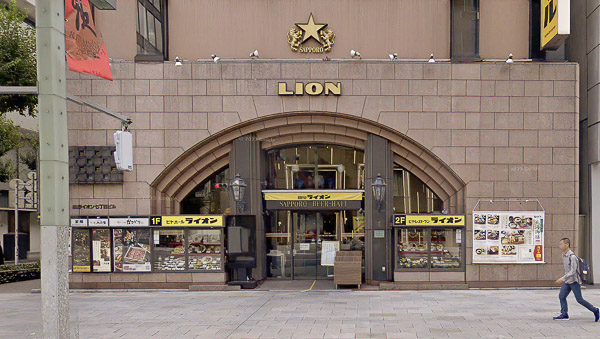
The Japanese really love beer. Beer sales are more than double those of sake and Shochu. There are no hours when beer cannot be purchased, no restrictions on consumption in public, and as far as I know, no minimum drinking age either. Sadly, one of Japan’s greatest mechanical achievements, beer vending machines, are being retried. Gone are the days when a few coins would get you a not so small aluminum keg, dropped with a mighty thud that would have destroyed lesser machines.
Japan’s wonderful convenience stores are filling the void, so to speak, but the best way to savor a beer is in a beer hall. And the grandest of the beer halls–well, the only Art Deco one–is the Ginza Lion. And the Lion has secrets.
Location: The Ginza Lion Beer Hall is just over a block south of the big Ginza Dori/Harumi Dori intersection. You’ll recognize the intersection when you see the old Wako department store that always gets destroyed in Godzilla movies. The place is a true survivor, sandwiched between Dior and Zara in Ginza’s mostly upscale shopping area. The Lion Beer Hall is open 11-10 and always seems busy except for the last 45 minutes in the evening.
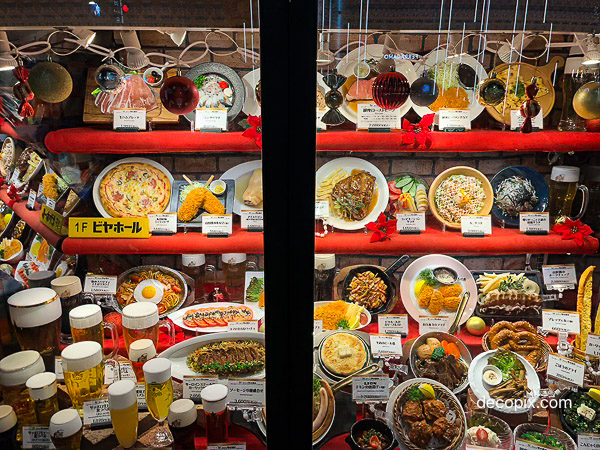
Replicas of the dishes served, crafted by expert modelers in Kappabashi.
Food? It’s a Japanese Hofbrau! There are all kinds of meats, sausages, wursts, potatoes, all high quality. Very good crab salad if you’re not a meat eater. Service is fast and efficient. Although you won’t have any difficulty ordering, for a place that caters to people from everywhere, English is in surprisingly short supply which is why it’s taken me multiple visits to piece this story together.
Where to begin? Today, the beer hall has a plain, modern entrance but this is not the original front. It appears that there were two earlier and much more interesting fronts. I don’t know when the changes took place but there are photos showing people dressed c.1960s in front of one of the beer hall’s Art Deco entrances (see photos).
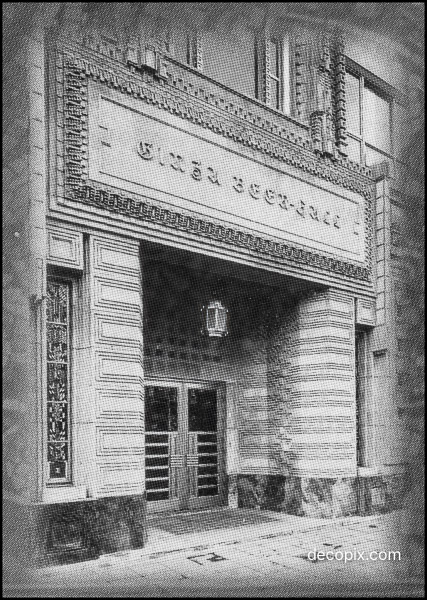
Original Beer Hall entrance c.1934
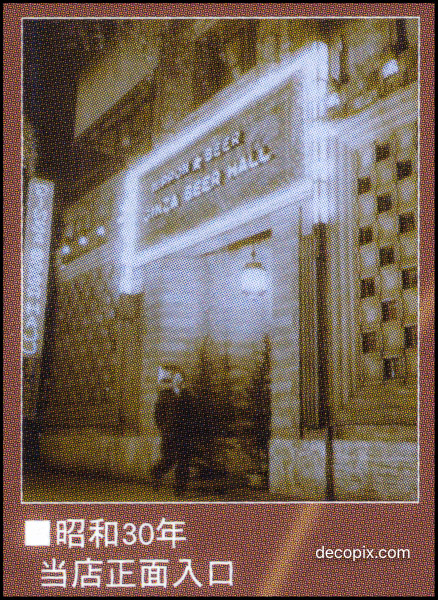
This photo is dated 1955. Today, the alternating tiles are covered outside, but some are still visible inside (see below)
There is a small smoking area tucked into one corner where you can see the original tiles.
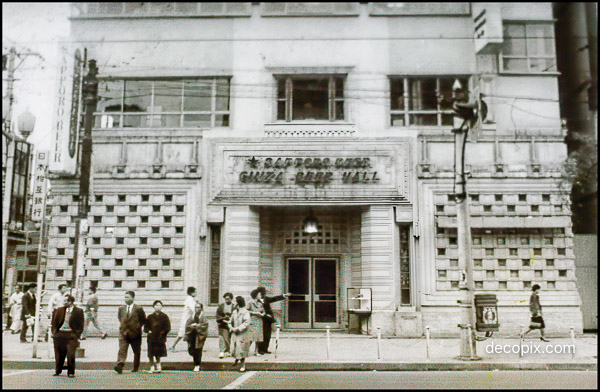
This photo, from the 1960s(?) shows the glass panels (see below for a close up).
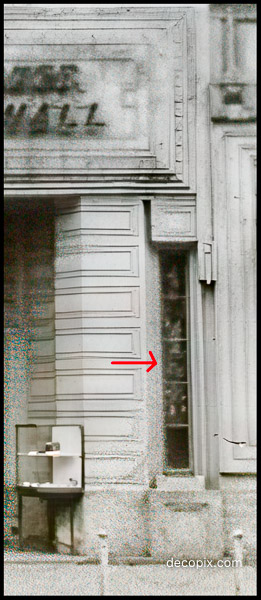
The display case has two steins of beer and to the right, is (I think) a row of stained glass panels.
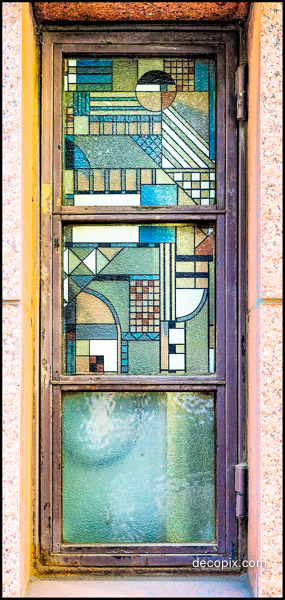
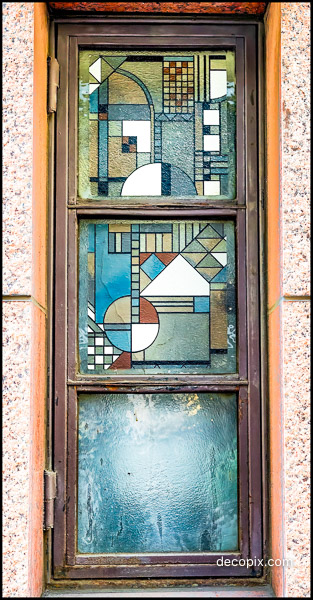
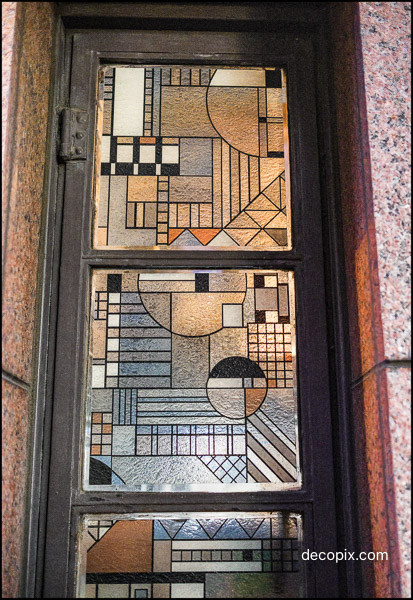
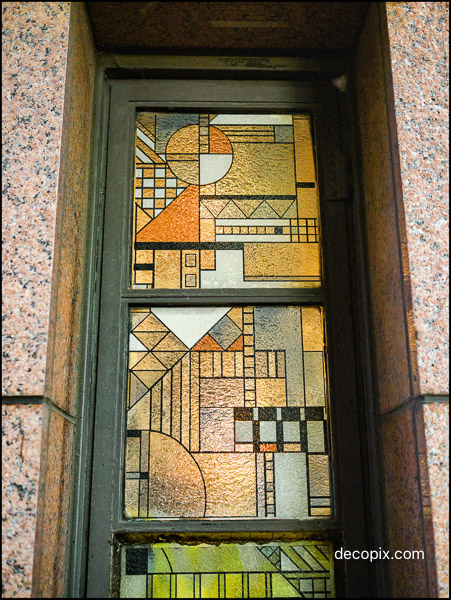
I’m going to guess that either (a) the earlier storefronts were too labor intensive to maintain or (b) too fragile. I am 99% sure the two vertical strips on either side of the doors in one old photo are stained glass panels. And I suspect these are the panels that now reside on the side of the building, but I’ll get to that later.
The building has six floors and the entrance to the rest is around the corner on Kojunsha Dori Street. Pass through these doors and you’ll be in a vintage lobby with beautiful green glazed bricks and doors that look inspired by Frank Lloyd Wright.
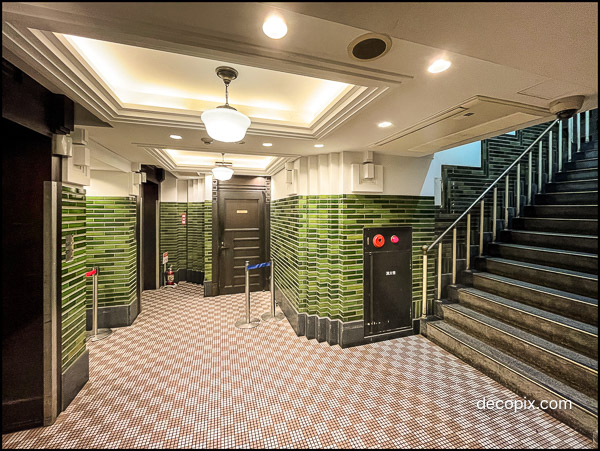
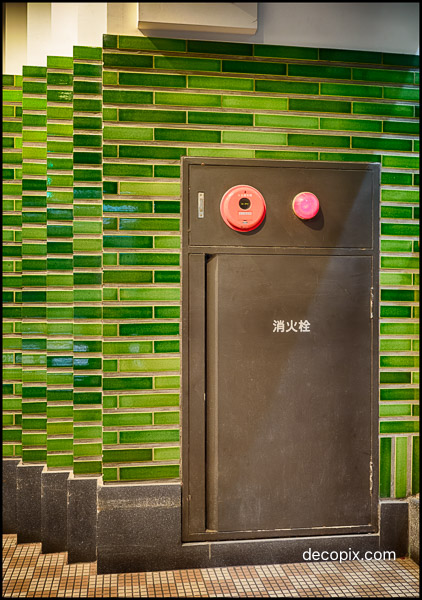
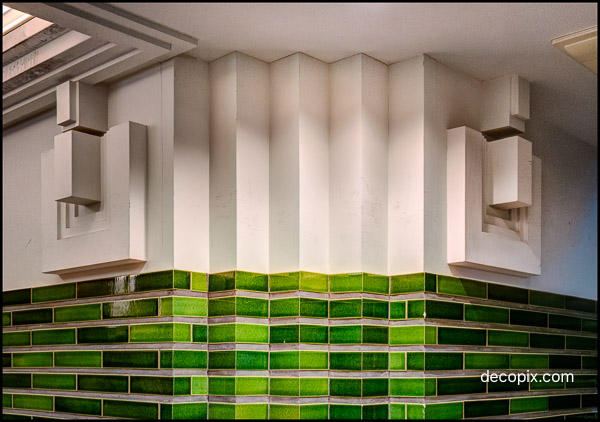
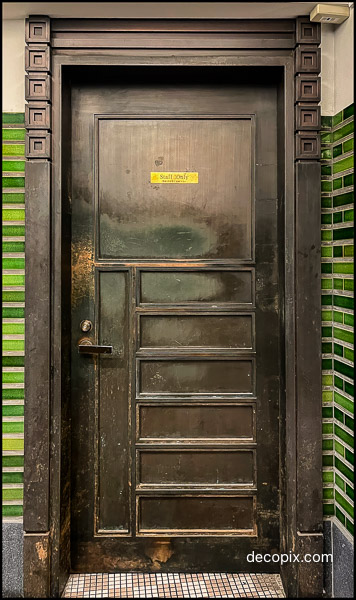
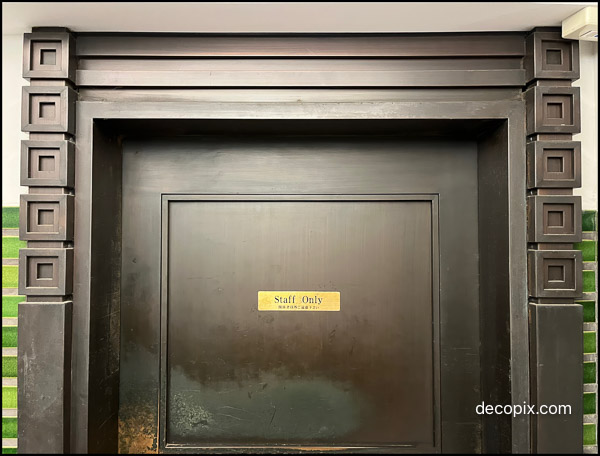
Head up the stairs and you’ll pass kitchens, another restaurant, offices and meeting rooms.
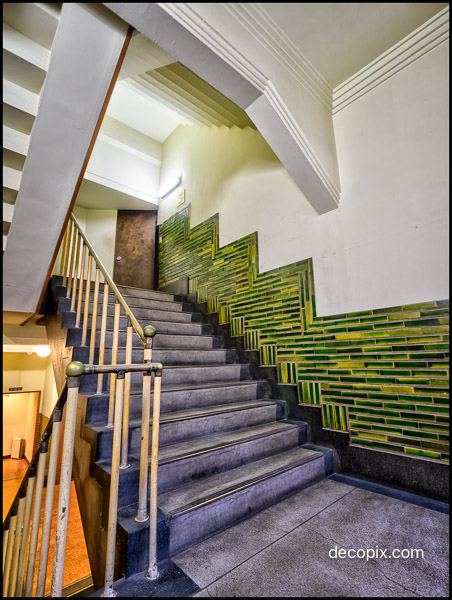
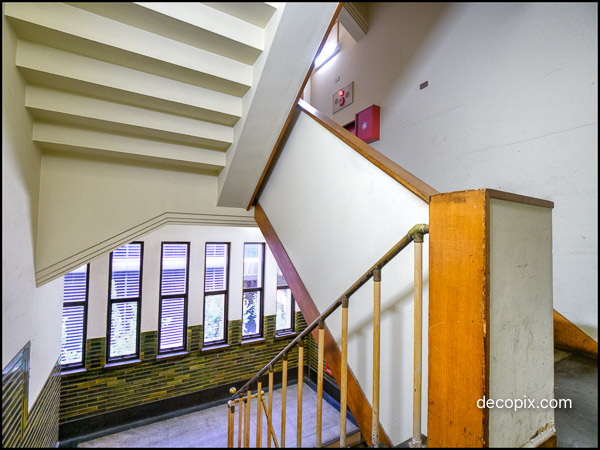
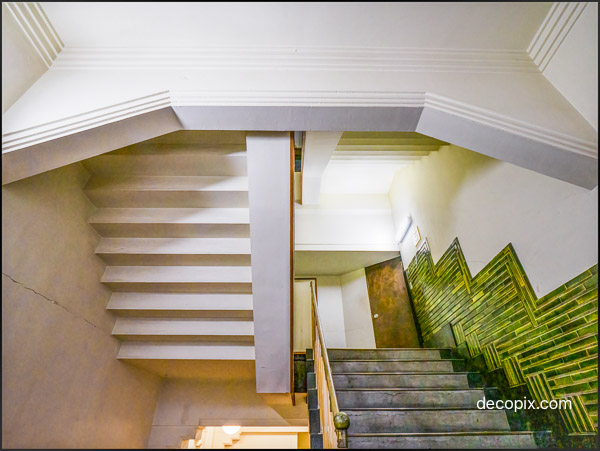
Just a few more stairs….
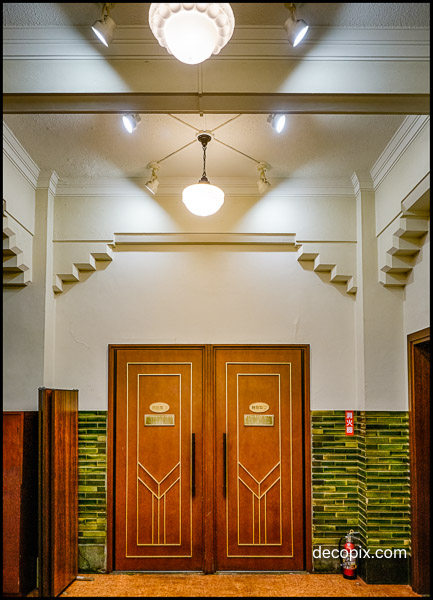
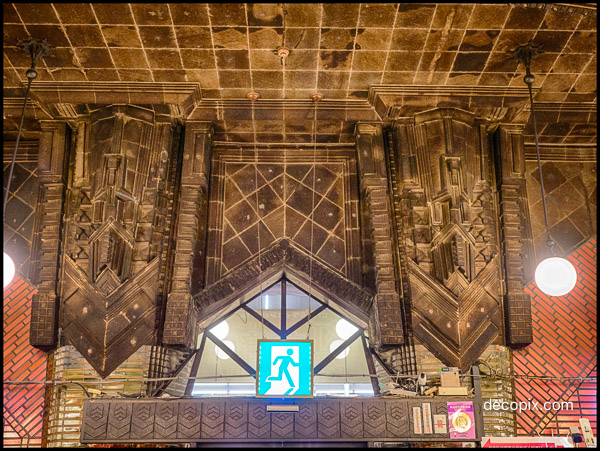
These doors lead to a modern conference room that’s not very interesting. But its the best view of the hall ceiling that I could get.
It’s a 1930s commercial building showing it’s age so you could just take the elevator but you do want to go to the top, the 6th floor. There, you’ll find two sets of doors. One set is modern, faux Art Deco and and contains a small conference room. The other set of doors, the old ones, leads to the Ginza Lion Meeting Hall. As the name suggests, this large room is used for meetings, celebrations, etc. Please be mindful that a private event may be in progress while you’re there.
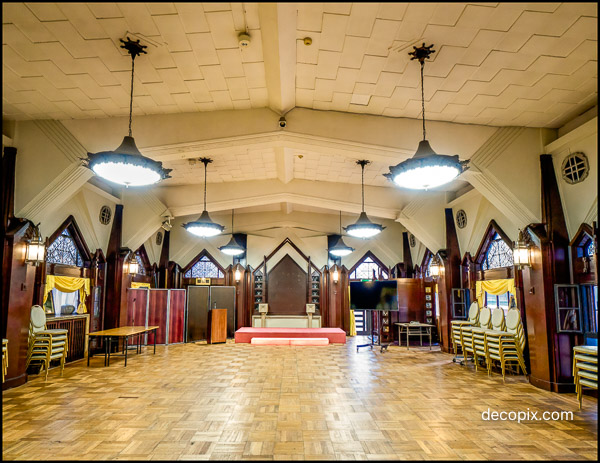
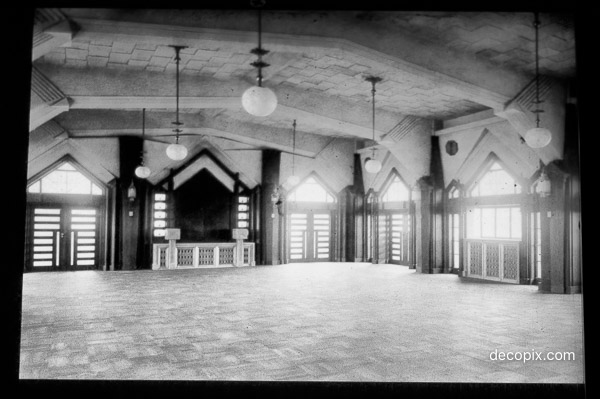
Surprisingly few changes!
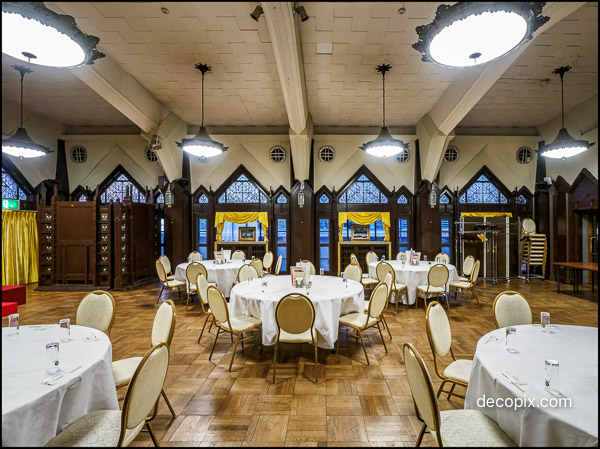
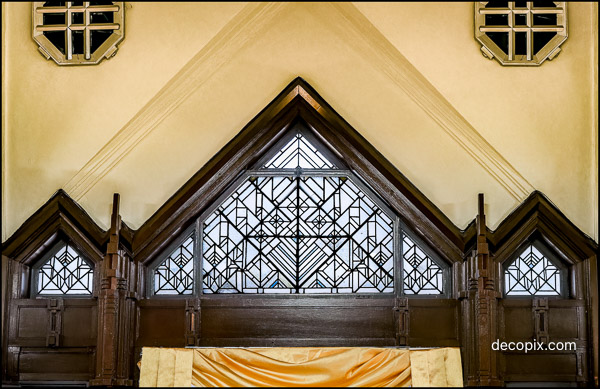
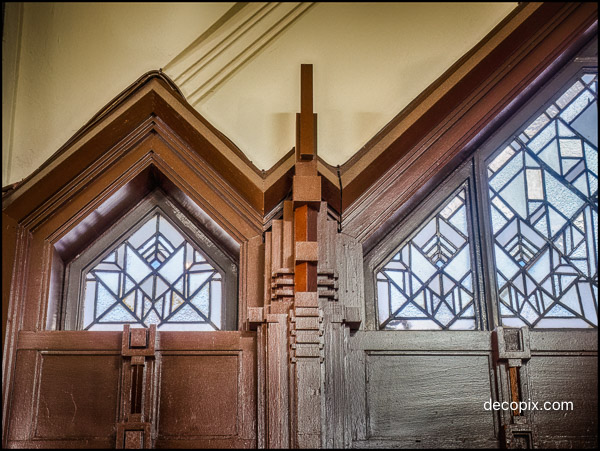
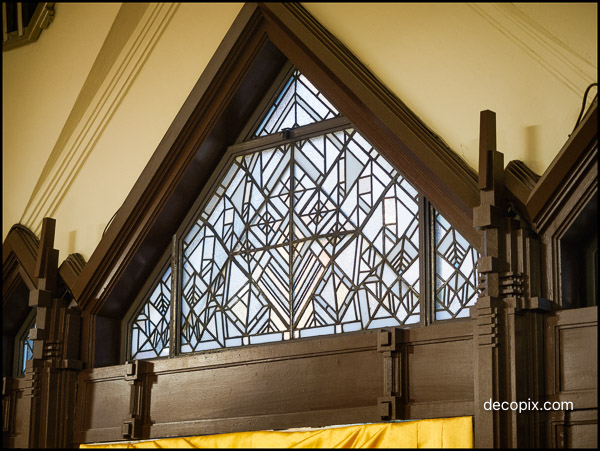
If you look very closely, you’ll notice the glass in this one is starting to buckle(!)
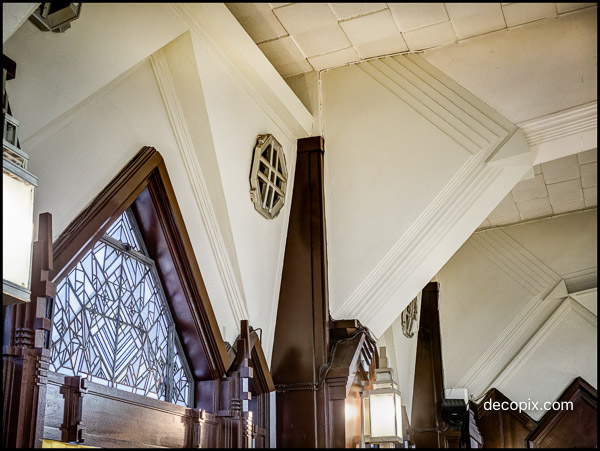
Crazy angles everywhere. And even the ventilation grilles are Art Deco styled.
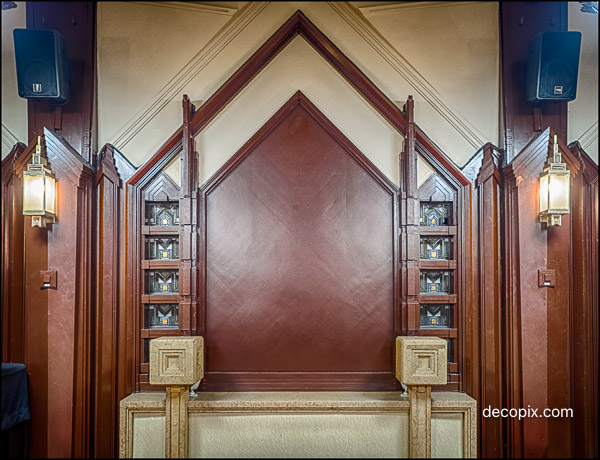
The Dais
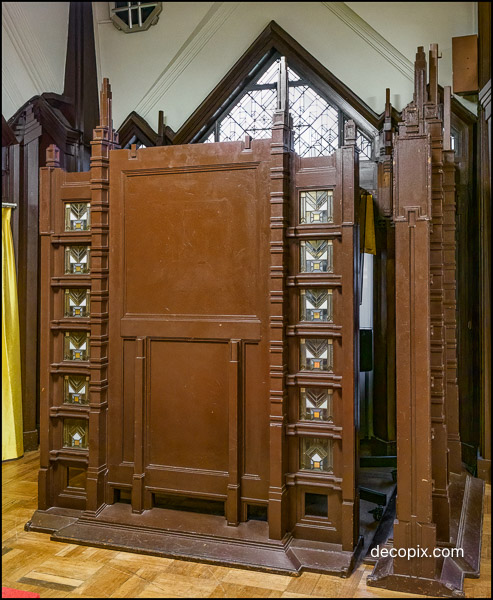
Privacy panel with stained glass inserts. They have these in the beer hall as well.
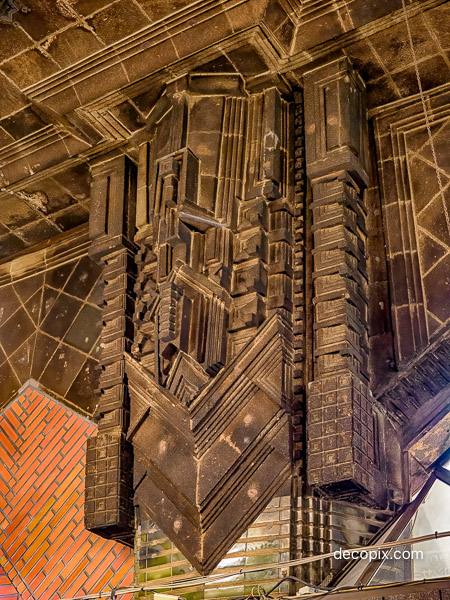
The meeting hall is extraordinary in several ways. Referencing the old photo, everything appears original except the lamps–and the lamps are still gorgeous and pretty old, I think. Some motifs from the beer hall are repeated; others are unique to this room.
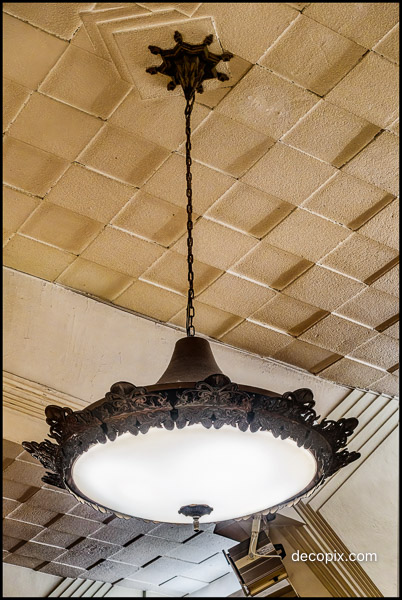
While appartently not original, these are amazing lamps.
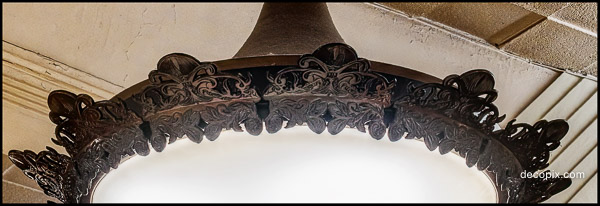
A closer look at one of the ceiling lamps.
There’s a secret here. The curtains are usually drawn, but there is a small balcony with a nice view and lovely Shinto shrine. Another secret is that the shine can be seen from the street, if you know where to look.
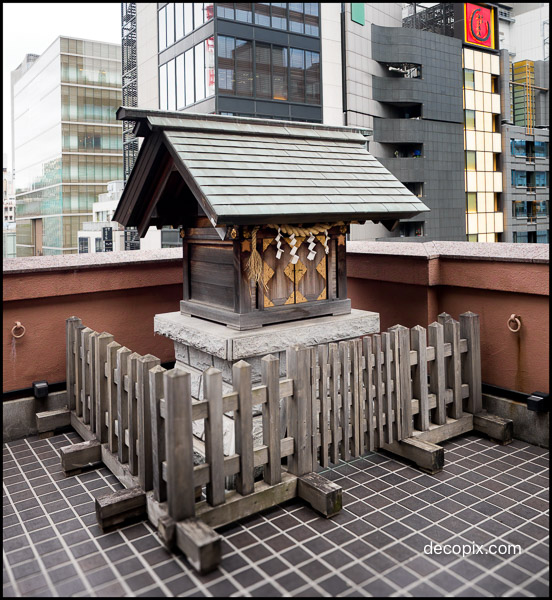
You may not see this shrine on the building’s balcony but if you know where to look, you can see it from the street!
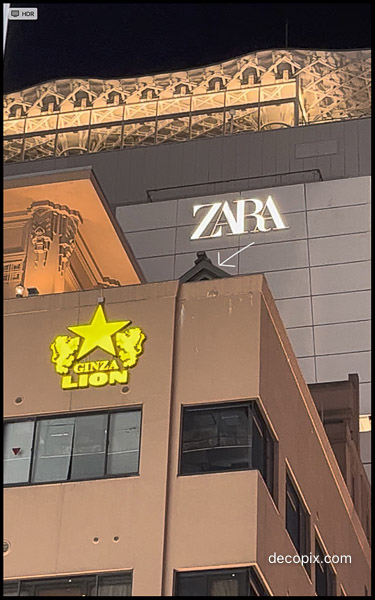
There it is.
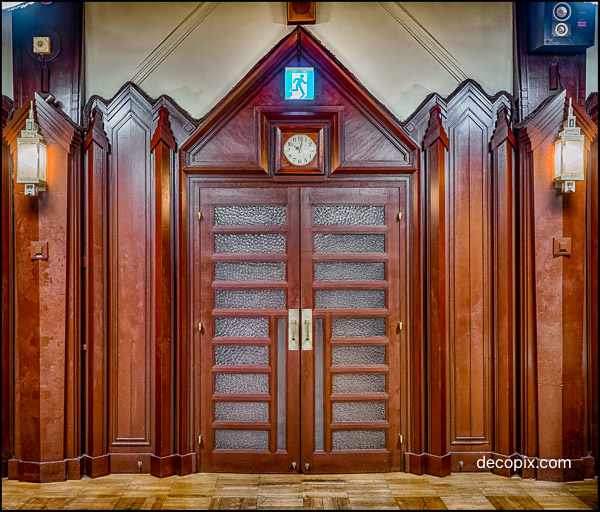
Time to leave but what a great exit.
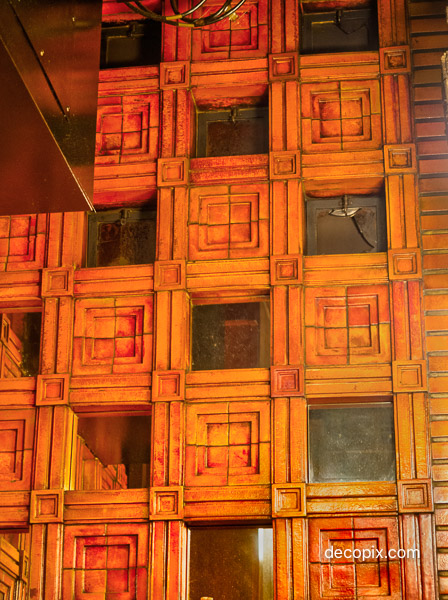
If you’ve gotten this far and haven’t eaten yet, you must be hungry. When you exit the building lobby and turn left to go back to the beer hall, as you walk towards the main street you’ll see something that’s really hidden, an assortment of Art Deco stained glass windows with most of the panels still intact. They are (wisely) set pretty deep into the wall and I swear I passed them on multiple visits without noticing they were there. My guess is that these were salvaged from the front, and perhaps having learned from experience, the building owners installed them out of harm’s way.
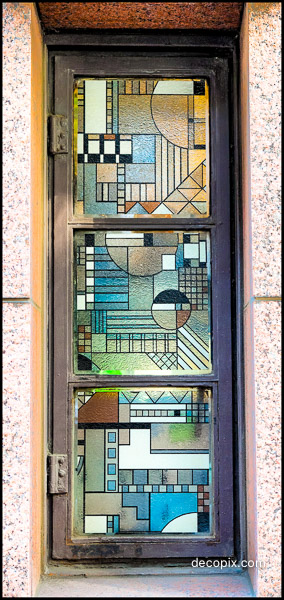
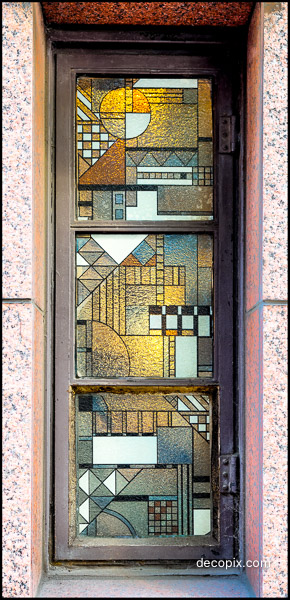
The Ginza Lion Beer Hall is a national historic site and on my last visit, the building was being refurbished for it’s 90th anniversary. Next visit, I’ll get a large Sapporo dark and toast to the next 90. Now let’s eat.
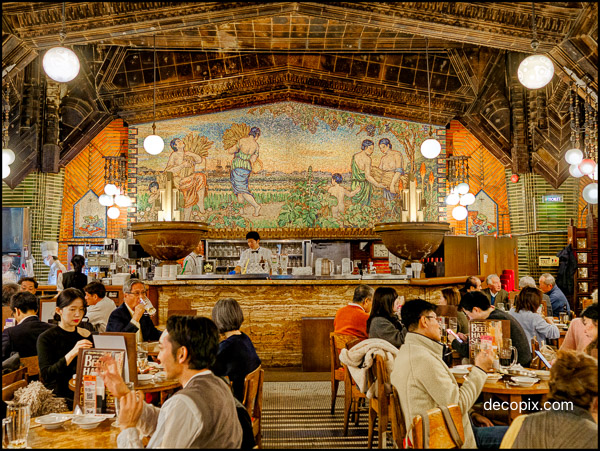
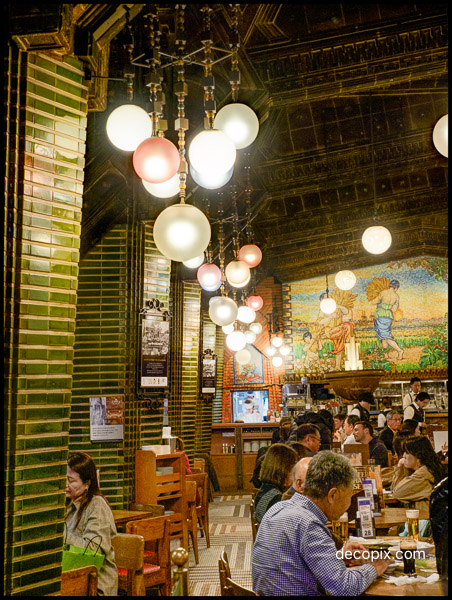
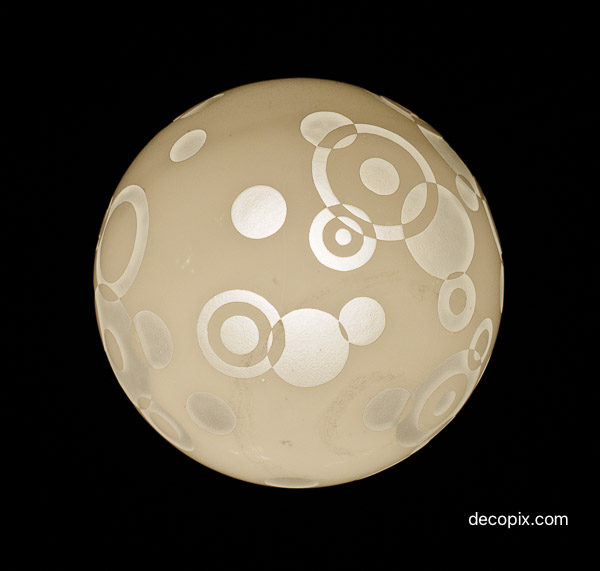
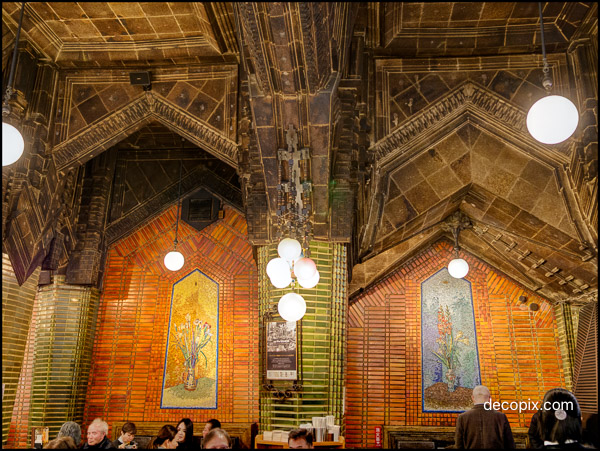
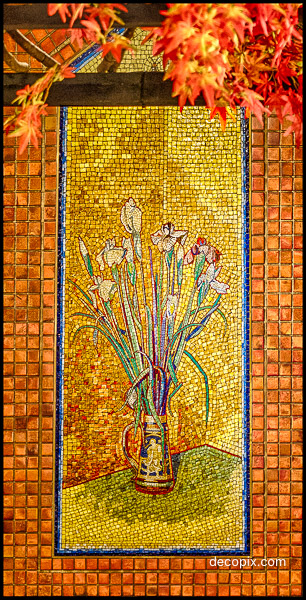
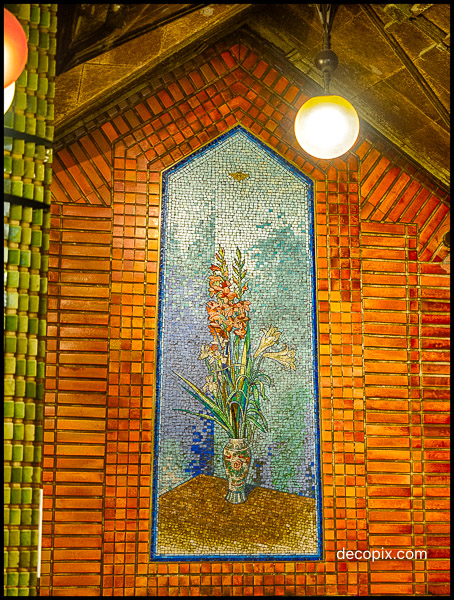
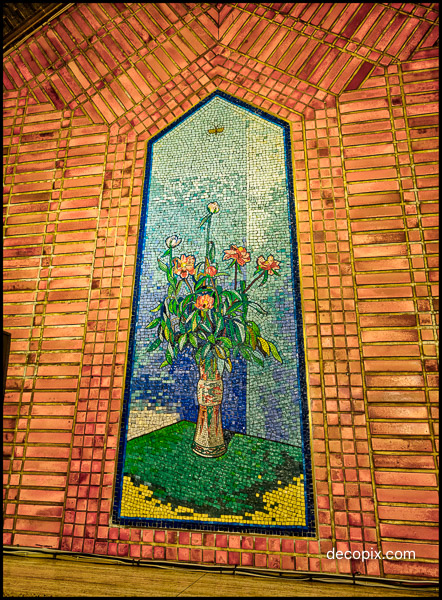
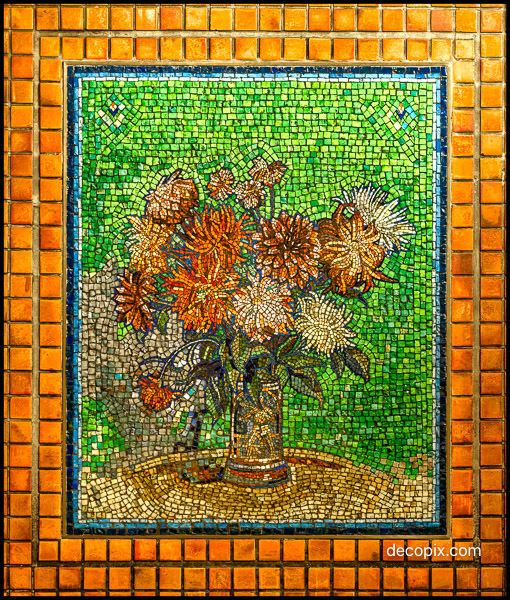
On each visit, I try to grab a few more of the mosaics.
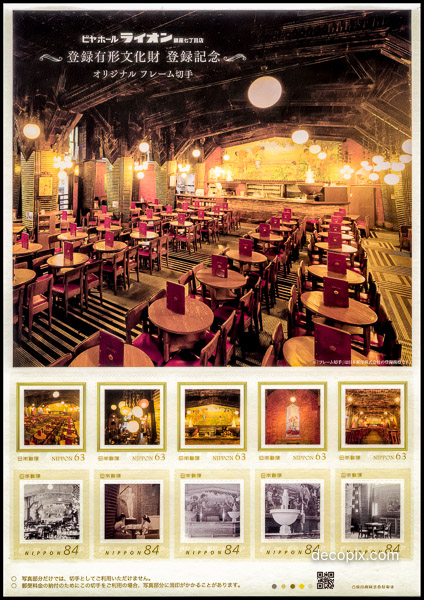
There are commemorative stamps…
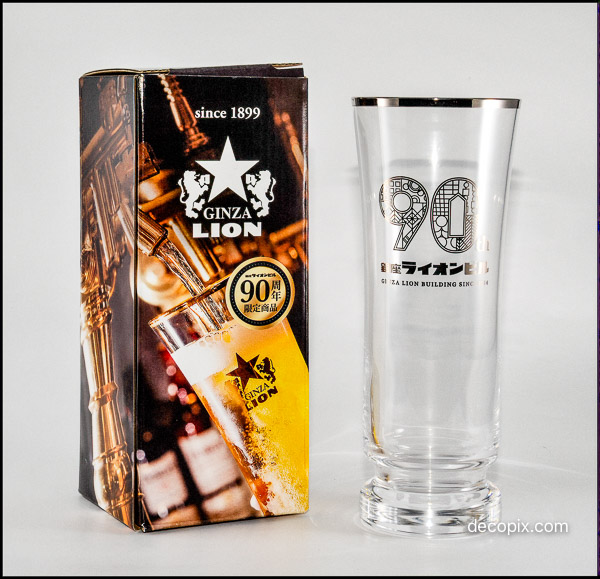
…and of course there’s a 90th anniversary beer glass, too.