The moment you publish a book is when the anxiety starts. Did you leave something out? Any mistakes? Where opinions and educated guesses labeled as such?
I think I’ve been lucky because in the seven years since my Lawson clock book was published, not many previously unknown clocks have appeared. And I’ve only caught one one typographical error, which no one has noticed (obviously including me) that I’ll reveal below.
But “not many” isn’t none, so here’s an update.
Lawson #110 (Los Angeles, 1933-34). This one looks very early and it is. We can tell because the tag says Lawson Clocks Limited and Lawson Clocks Limited became Lawson Time, Inc., in 1934. The case was almost certainly made by Adler in Chicago who made radio cabinets and cabinets for some early Pennwood clocks as well. Not a clock for Art Deco collectors but still, it’s the only one I’ve ever seen.
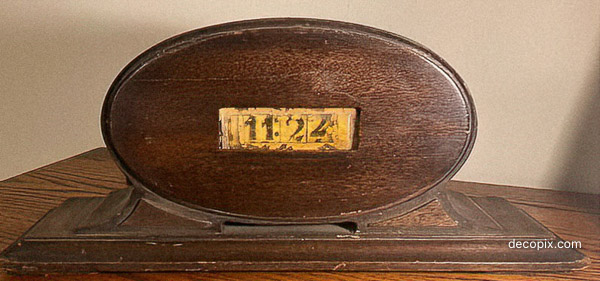
Lawson #110 (courtesy Frank Novak)
Next, two new members of the Lawson royal family. The Empress (Los Angeles, 1930s), Lawson’s only pre war plastic clock was advertised as available in a variety of of colors yet no one had ever seen an Empress in any color but brown. Recently, a white Empress turned up, and was lovingly restored by Bob Goldman. And unlike my brown Empress, Bob’s white one had it’s original tag so now we know the Empress was model #99.
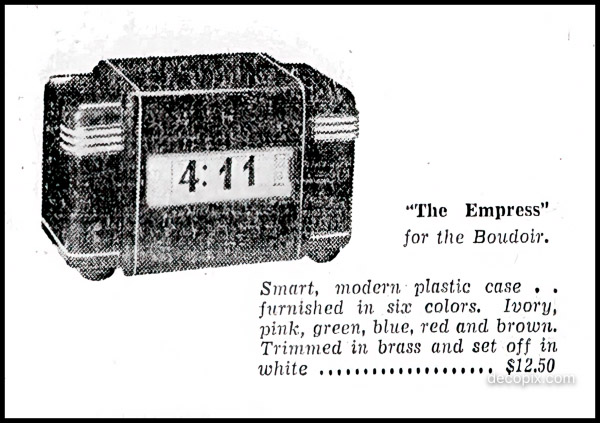
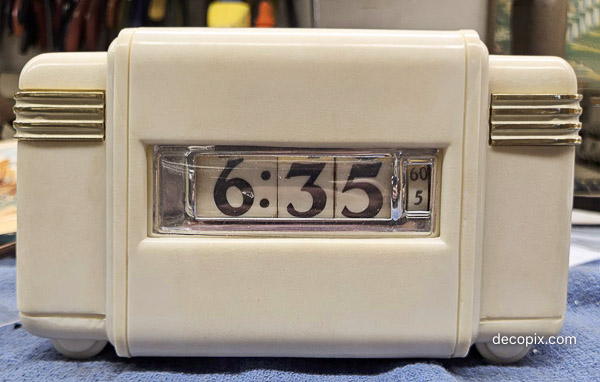
Lawson #99 Empress (courtesy Bob Goldman)
Now, a white Empress is an amazing find, but how about a model that has never appeared in any color? The Empress was part of the royal family and just as I was writing this post, a Lawson #175 Emperor (Los Angeles, 1930s) was discovered. Although missing it’s original pen holder and pen humidor, whatever that was, the Emperor is as rare as it gets. Well, except for the Prince, which has yet to be found. This Emperor will need a new pen holder and a proper set of Lawson wheels but that’s easy.
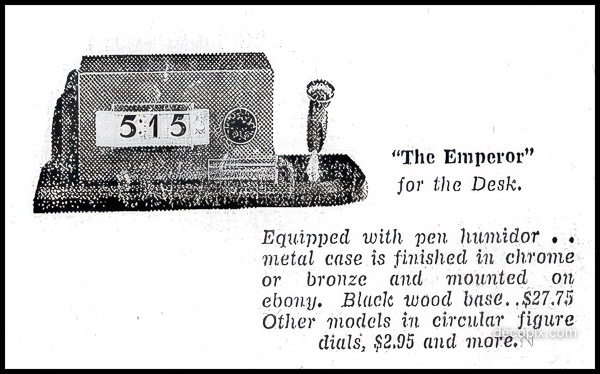
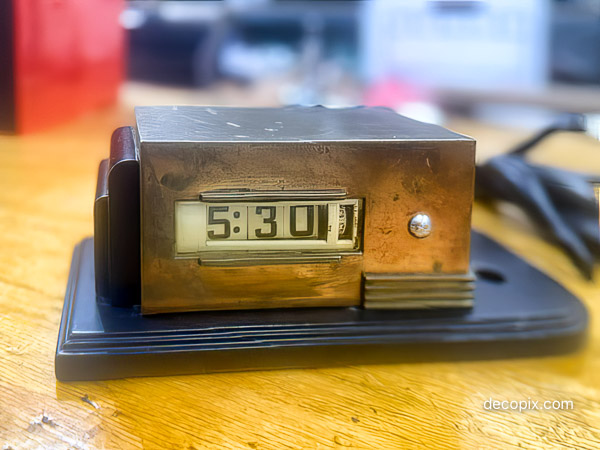
Lawson #175 Emperor (courtesy Frank Novak)
Lawson #205 Barrister variation (Los Angeles, 1930s). This isn’t as earth shattering as the two above, but I always wanted a Barrister. This one was in poor condition but was subsequently restored by master refinisher Tim Kilboy. What makes this a variation is that the feet are different from the other example I’ve seen and if you look very closely, the curvature of the edges of the case is different too.
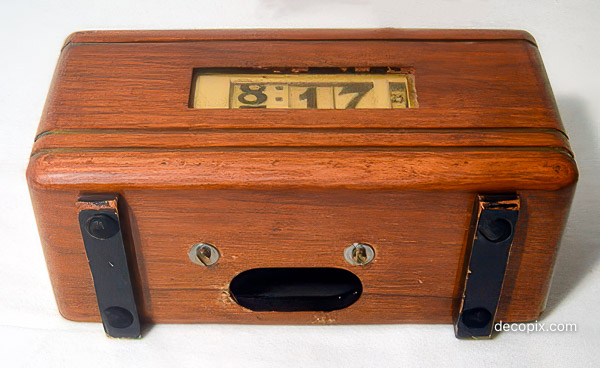
Lawson #205 (courtesy Neil Kuns)
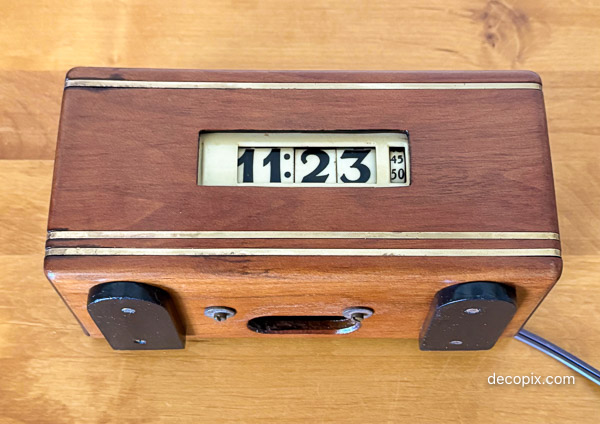
Lawson #205 (author’s collection)
Lawson #215 variation (Alhambra, CA, 1948 or later). Lawson afficionado Budd Goldman found a unique Lawson #215 that looks unlike any other #215 and what makes this especially interesging is that normally, a #215 is the Lawson Southerner which was wildly popular and sold for decades. So I guess Budd’s 215 is like a coin that was struck with the wrong number.
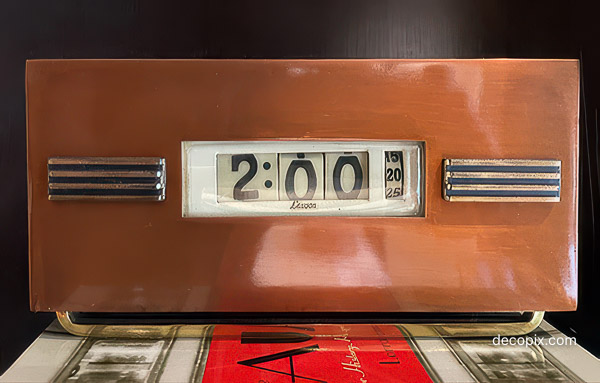
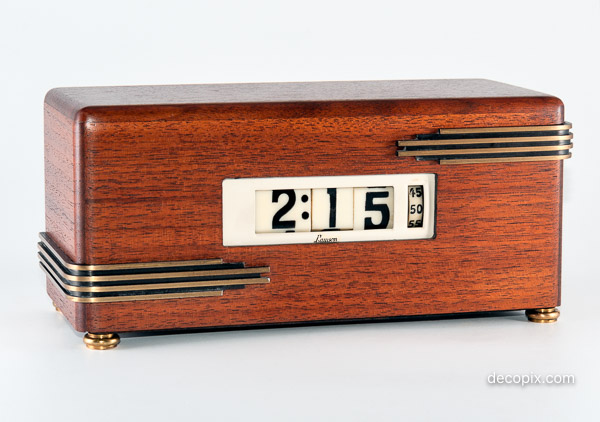
Lawson #350 (Alhambra, CA, 1948 or later). Some time after the book was published I saw a picture of one of these in one of those Becken catalog pages people sell on eBay. Since it’s an unusual combination of parts from models #217 & #309, and it shares model numbert 350 with the pre-war Lawson “Manhattan” model, I had my doubts that this clock was produced but here it is.
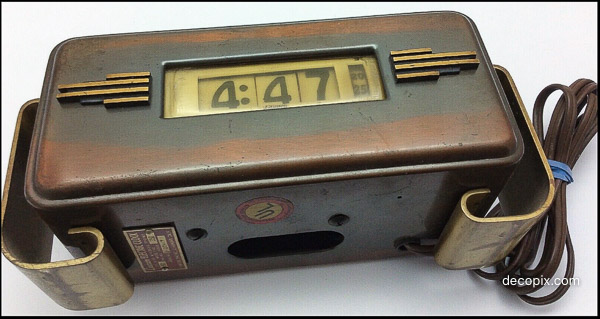
Here, from a page in Parker Pen’s 1938 catalog, is the KLOCKLAW, a pen and pencil set including a Lawson Zephyr. Price in 1938? $90. Adjusted for inflation, a KLOCKLAW today would cost you $2138.17.
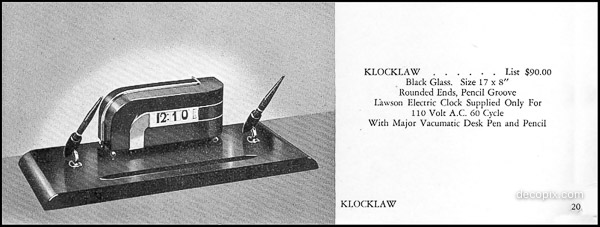
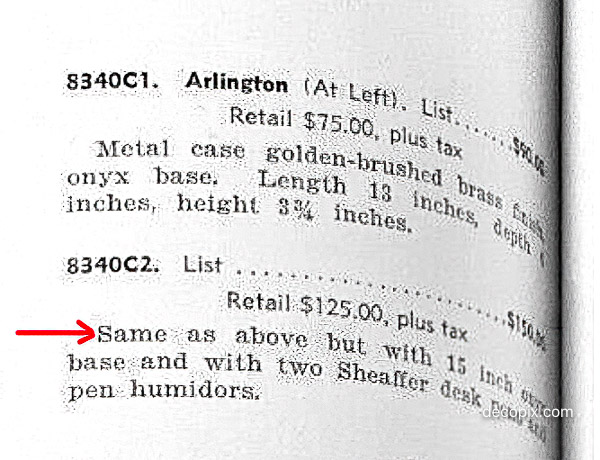
Considerably more modest, in 1948 Lawson Time offered a variation on the Arlington #97 (Los Angeles, 1930s, Pasadena (1940 or 1946-47), Alhambra, CA, 1948 and later) with an extra long base and two Sheaffer pens. $125 in 1948? That would be $1737.45 in 2026. I should point out that ads I’ve looked at show that around the time Henry Fenenbock acquired the company (1948) prices seem to have gone down. An ad from 1949 (today’s price, $266.72):
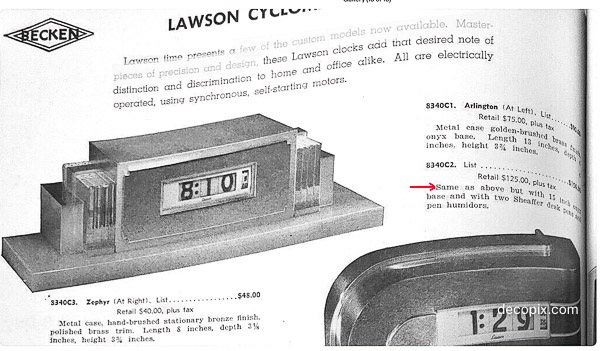
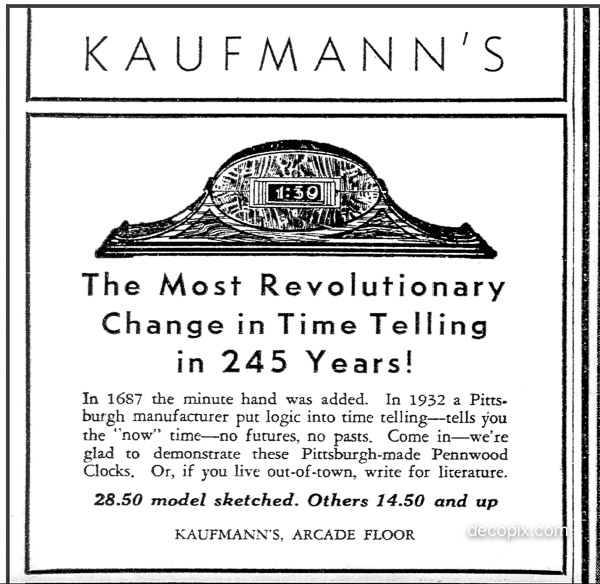
Finally, an honorable mention. In one of the very first ads for a cyclometer clock, from 1932, Kauffman’s department store in Pittsburgh advertised a Pennwood clock with black wheels. Since it was just a drawing, I figured the artist got creative, but it turns out at least one Pennwood clock with black wheels exists–and it still works! Many thanks to clock expert Russ Windle for this one.
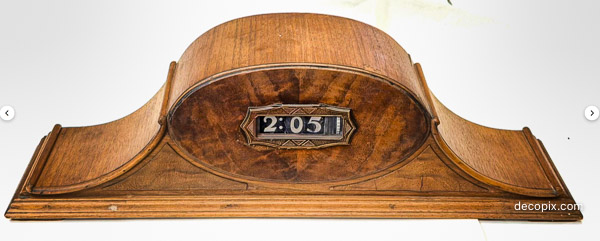
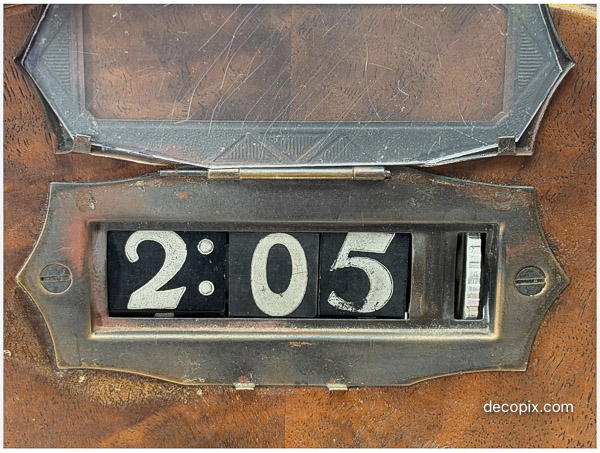
Very early Pennwood clock, c.1932 (courtesy Russ Windle)